
Last updated November 16, 2026
 AC repair
 Furnace & heating
 Heat pumps
 Ductless mini splits
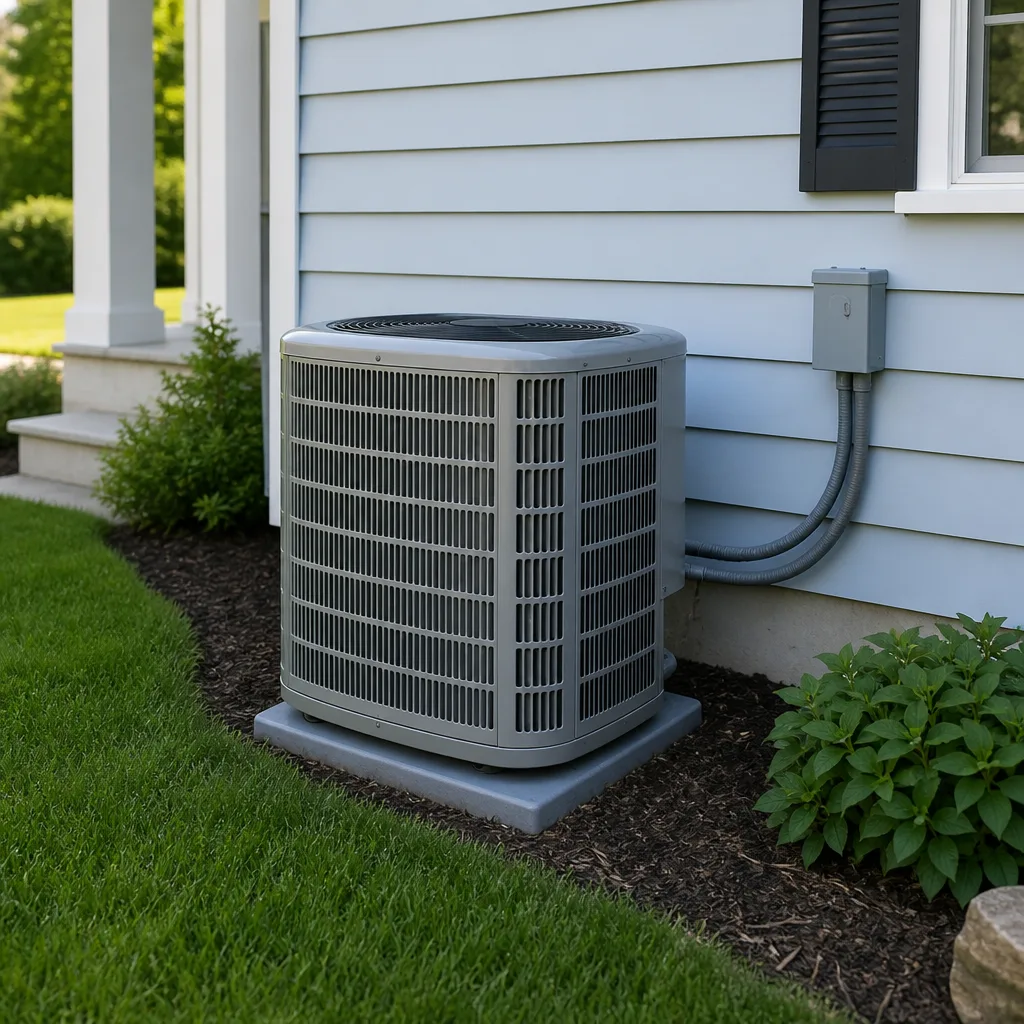 Carrier
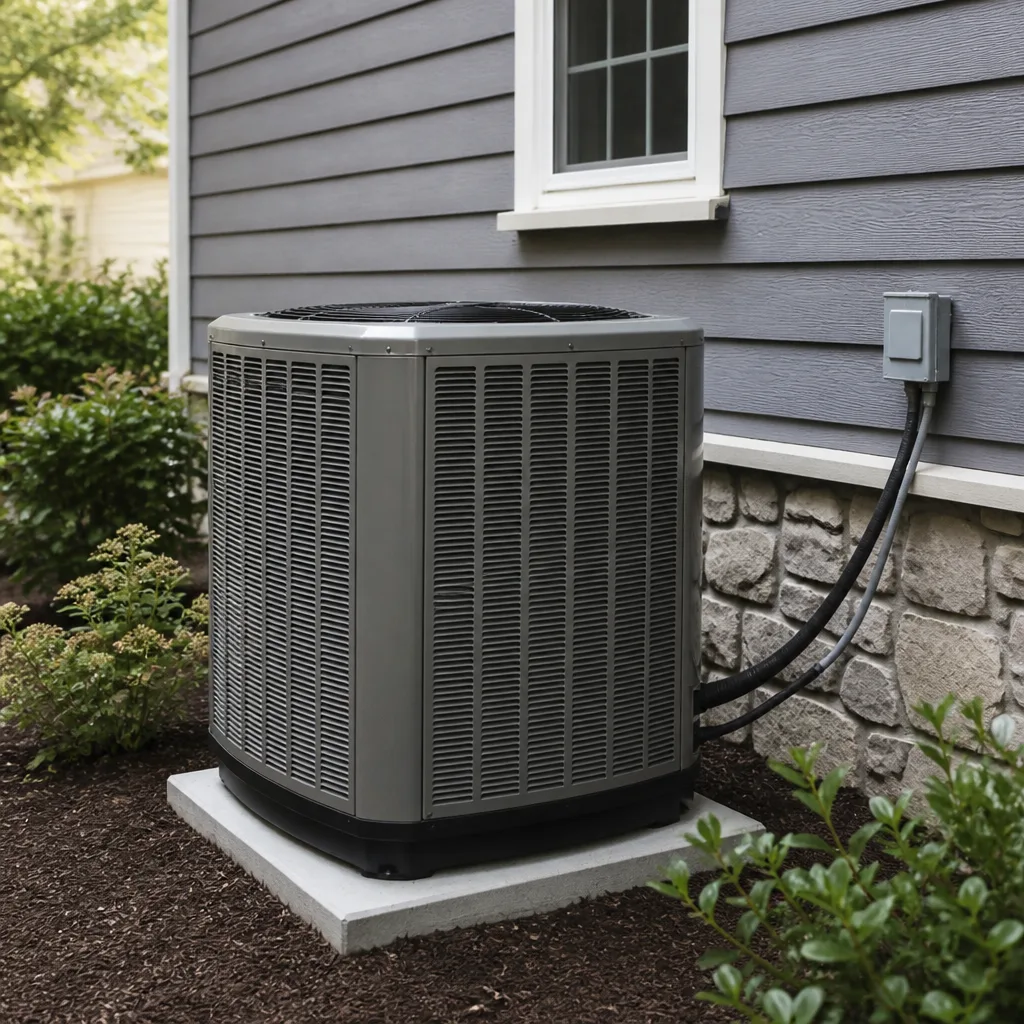 Trane
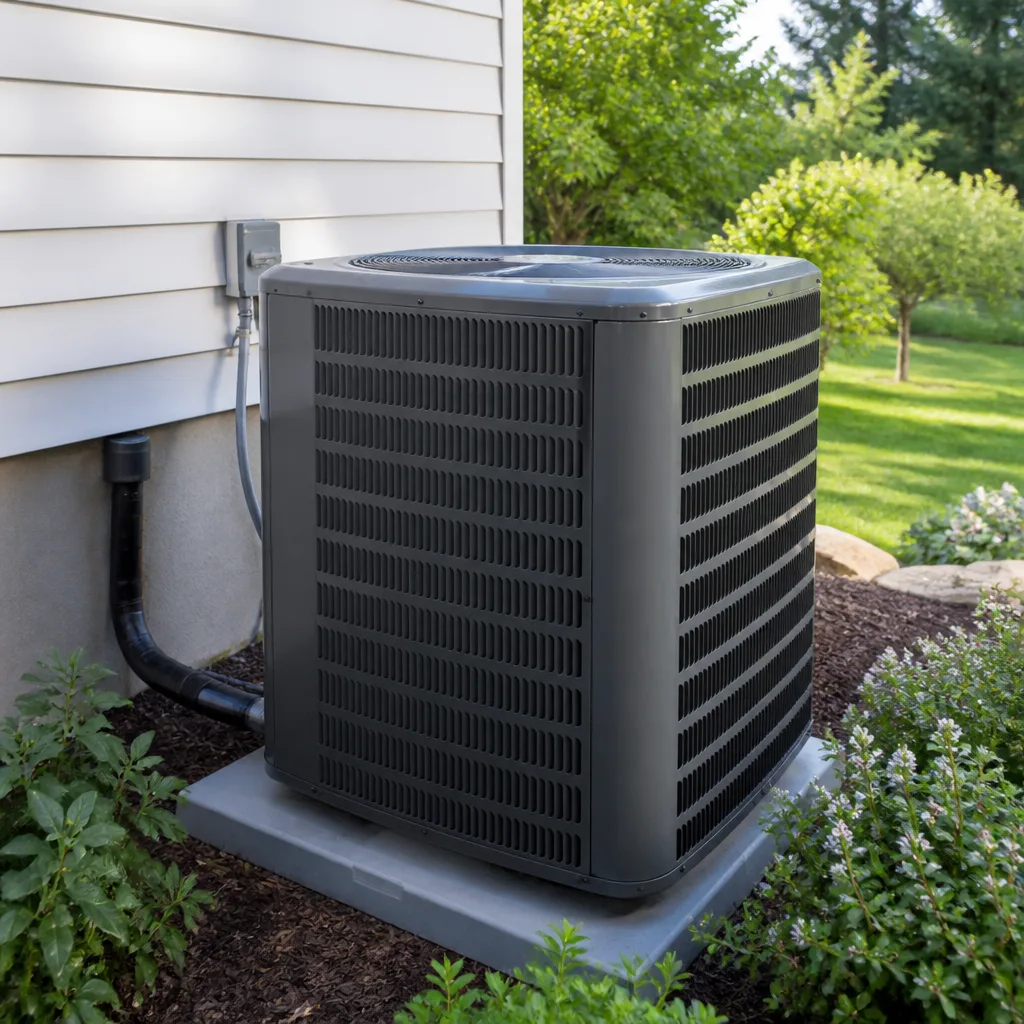 Goodman
Seasonal tune-up and full diagnostic on your Carrier, Trane, or Goodman system - readings shown to you before any repair is proposed
Diagnosis first, numbers second - you approve the repair price before a single part goes in.
Get your free estimateAC Installation Maintenance Checklist for St. Petersburg Homeowners
The “change your filter every 90 days” rule was written for a dry climate. In St. Petersburg, a filter loaded with pollen, dust, and constant humidity turns into a breeding ground for biological growth long before day 90. That single piece of inherited advice is why so many local systems run hard, smell musty, and quit early. This guide resequences the whole maintenance calendar around the humidity cycle that runs here year-round, not the four tidy seasons most checklists assume. You’ll get a month-by-month task list, a post-installation inspection sequence, the drain-maintenance routine that matters most in this climate, and a clear line between what you can safely check yourself and what belongs to a licensed technician. The checklist doubles as a decision log so you know not just what to do, but when to stop doing it yourself.
Quick Answer
A St. Petersburg AC maintenance checklist should focus on moisture control as much as cooling: check and replace the filter monthly during heavy-use stretches, flush the condensate drain every 30 to 60 days, keep the outdoor unit clear, and have a licensed technician verify refrigerant, airflow, and electrical components once a year. A post-installation inspection at 30, 60, and 90 days protects the warranty on any new system. The biggest local mistake is treating humidity like a summer-only problem when it drives your equipment year-round.
Styles & brands we work with
- AC repair
- Furnace & heating
- Heat pumps
- Ductless mini splits
- Carrier
- Trane
- Goodman
Table of Contents
- Why St. Petersburg Maintenance Is Different
- The Month-by-Month Task Calendar
- The 30-60-90 Day Post-Installation Inspection
- Condensate Drain Maintenance in High Humidity
- Documenting Refrigerant, Airflow, and Capacitor Health
- DIY Tasks vs. Licensed-Tech Tasks
- Common Mistakes to Avoid
- Frequently Asked Questions
Why St. Petersburg Maintenance Is Different
Most maintenance checklists you’ll find online assume a climate with a distinct heating season and a distinct cooling season. St. Petersburg doesn’t work that way. The system here spends the better part of the year removing moisture from the air, and that changes which tasks matter and how often they need doing. A unit that runs for cooling also runs for dehumidification, which means the condensate drain, the evaporator coil, and the filter are all under constant load. That differs from a place where the AC sits idle for months and gets a simple spring cleaning.
The practical consequence is that “seasonal” maintenance is a misleading phrase in St. Petersburg. Humidity doesn’t take a season off. Your system may switch to heating for only a few short stretches, but the cooling and dehumidifying cycle carries most of the year. So the tasks tied to moisture – drain flushing, coil cleanliness, filter changes – deserve a tighter schedule than a national calendar would suggest.
Housing stock matters too. Many homes in neighborhoods like Shore Acres, Euclid, and Crescent Lake were built decades ago and have had systems replaced piecemeal over the years. You might have a newer condenser paired with older ductwork, or a variable-speed air handler feeding a layout that was never designed for it. That mismatch doesn’t show up in a generic checklist. It shows up in airflow readings and static pressure, which is why documenting your baseline matters so much.
If you’ve recently had a new system commissioned, the work of protecting it starts right away, and understanding what proper AC installation involves helps you know what to verify in those first weeks. For the heating side, a furnace may get lighter use here, but it still needs attention when the occasional cold snap arrives, which is why it pays to know a reliable source for furnace repair before you need one.
The Month-by-Month Task Calendar
A generic four-season template assigns tasks by the calendar rather than by what your equipment is actually doing. In St. Petersburg, the useful way to build a calendar is to group tasks by intensity of use. Here’s how we’d sequence a full year of homeowner-level maintenance, with the professional visit placed where it does the most good.
Every month, year-round:
- Check the filter. Hold it up to a light. If you can’t see through it, replace it. In high-use months this may mean every 3 to 4 weeks, not every 90 days.
- Look at the condensate drain pan for standing water. Any water sitting in the pan is a signal to investigate the drain line.
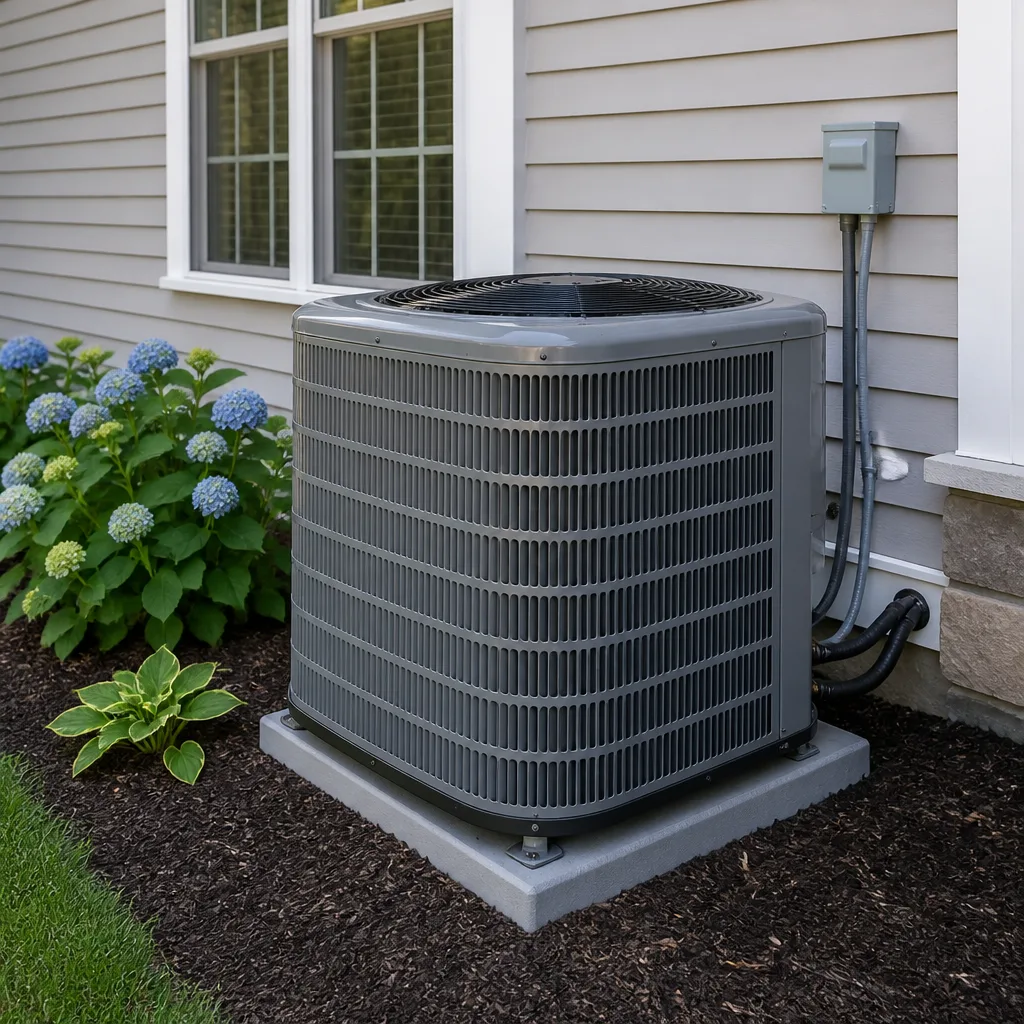
- Clear the area around the outdoor unit. Trim vegetation back so air can move freely through the coil.
- Note anything unusual – new noises, a musty smell, uneven cooling room to room, or higher run times – in a simple log.
Peak-use months (the long humid stretch):
- Flush the condensate drain every 30 to 60 days (the method is below).
- Wipe down the indoor coil access area if it’s reachable without opening panels, and watch for visible buildup.
- Check that supply vents throughout the house are open and unobstructed by furniture or rugs.
Lower-use stretch (the milder months):
- Schedule the annual professional maintenance visit so it lands before the heaviest cooling demand, not in the middle of it.
- Rinse the outdoor coil gently (power off first) if it’s visibly dirty.
- Test the heating function briefly so you’re not discovering a problem when you actually need heat.
Once a year, professional:
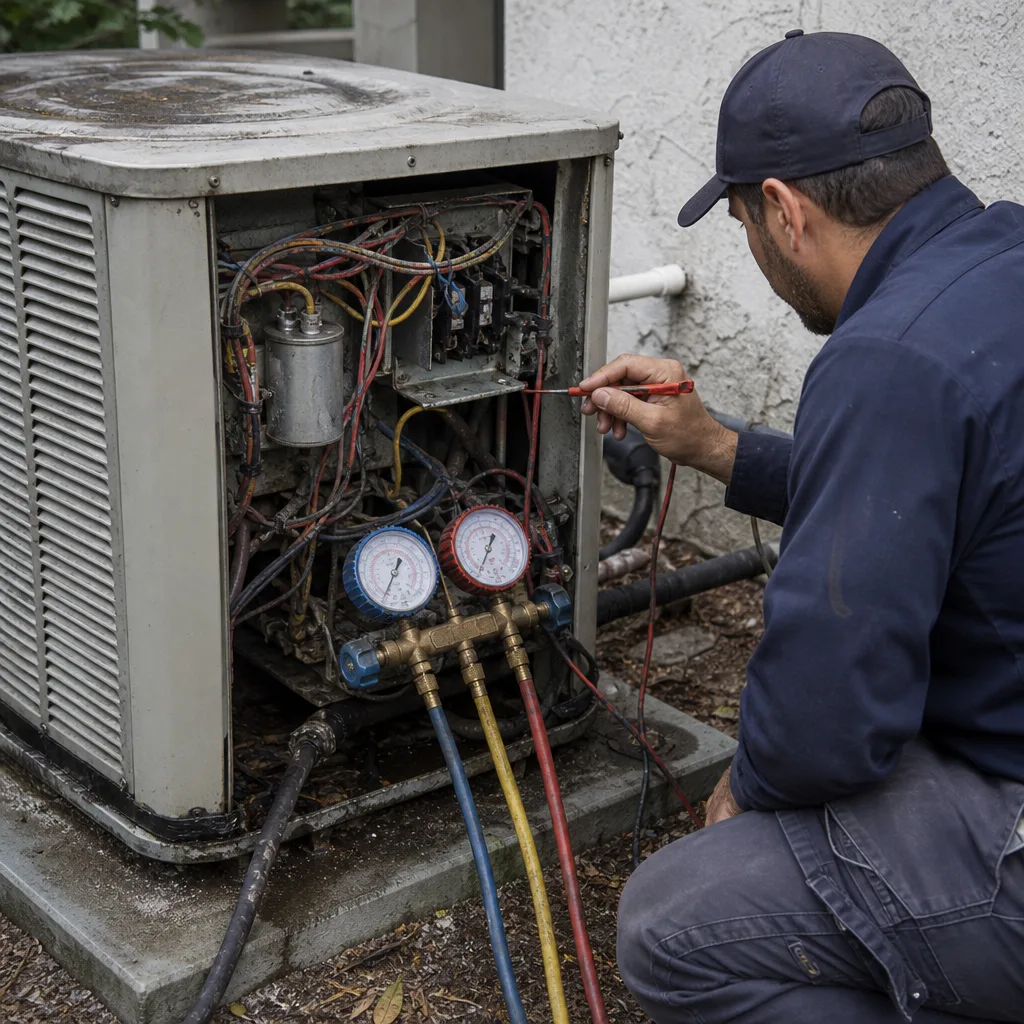
- Refrigerant charge verification, airflow measurement, electrical and capacitor check, coil cleaning, and a written report of findings.
The point of a calendar tied to use rather than seasons is that you stop guessing. If your system has been running hard for a month, it needs a filter check, full stop.
The 30-60-90 Day Post-Installation Inspection
A new system is not “done” the day it’s commissioned. It has to prove itself under real household load, and the warranty window is your chance to catch problems before they become your expense. This is why we treat the first 90 days after any installation as a structured inspection sequence rather than a single handshake. Whether your new equipment is a York, a Daikin, or anything else, the sequence is the same.
Day 30 – First check:
- Confirm cooling performance room by room. Note any space that runs warmer than it should.
- Check the filter condition – a brand-new system can load a filter quickly if the home has dust from construction or moving.
- Inspect the condensate drain and pan for proper flow and no standing water.
- Listen for unusual sounds at startup and shutdown.
- Review the installation paperwork and confirm the model and serial numbers on file match the equipment installed.
Day 60 – Verify and adjust:
- Re-check airflow at supply registers and confirm nothing has shifted.
- Look for condensation where it shouldn’t be – on ducts, around the air handler, or on the refrigerant lines.
- Confirm the thermostat is holding setpoints without wide swings.
Day 90 – Baseline lock-in:
- Record refrigerant charge, airflow readings, and electrical measurements so you have a documented baseline.
- Confirm the drain is still flowing freely after two months of real use.
- File the written report. This baseline is what a future technician compares against when something changes.
Filing that 90-day report matters more than most homeowners realize. When your system starts acting up two years later, the technician can compare current readings to the original baseline instead of starting from scratch. That’s how you get a straight answer on repair versus replacement instead of a guess.
Condensate Drain Maintenance in High Humidity
In a humid climate, the condensate drain is the part of your system most likely to cause real damage, and the part most homeowners never think about. Your AC pulls moisture out of the air all day, and that water has to leave the system cleanly. When the drain clogs, the water backs up into the pan, then into the air handler compartment, then into your ceiling or floor. A drain that’s flowing fine in a dry climate can load up with biological growth here in weeks.
How often to flush it: every 30 to 60 days during heavy cooling, and always before the peak of the humid season. If your system runs nearly year-round, treat the shorter end of that range as the default.
A safe homeowner flush method:
- Turn the system off at the thermostat.
- Locate the drain line where it exits the indoor unit and find the cleanout cap or tee if there is one.
- Pour a cup of plain water or a mix of water and white vinegar slowly into the cleanout to check flow.
- Watch the drain’s outdoor termination for steady flow. If water backs up, the line is clogged.
- If you can reach the trap, check it for buildup and clear debris. Don’t force anything past a blockage – that’s a sign to stop and call a technician.
When a wet switch is non-negotiable: a wet switch is a small safety device that shuts the system off when it detects water in the drain pan. In a high-humidity climate like St. Petersburg, we consider it close to essential, because a clogged drain here can produce water damage before you notice anything is wrong. If your system doesn’t have one, ask about adding it. It’s one of the least expensive safeguards you can put in place.
There’s a limit to what’s safe to do yourself here. If the drain is chronically clogging, if you find water in the pan despite flushing, or if you see growth on the coil or in the ductwork, that’s a technician’s job. Mold in an HVAC system moves into the air you breathe, and it’s not something to chase with a bottle of cleaner.
Documenting Refrigerant, Airflow, and Capacitor Health
The single most useful thing you can do for your system’s long-term health is to keep records. A system that’s “working fine” today only means something if you know what its numbers looked like yesterday. Without a baseline, every future problem is a mystery. With one, a technician can tell you within minutes whether a change is significant or just normal variation.
What to record at each professional visit:
- Refrigerant level: charge readings noted as “within spec” or “low” with the measured values. A system that needs refrigerant added is telling you it has a leak, and the trend matters more than any single reading.
- Airflow readings: static pressure and supply/return measurements. These tell you whether your ducts are moving the air your equipment was designed for.
- Capacitor health: measured capacitance compared to the rated value. A capacitor that’s drifting out of spec is a common cause of “the AC won’t start” calls, and catching it early is a cheap fix instead of an inconvenient failure.
- Electrical measurements: amperage draw at the compressor and blower, noted for comparison next time.
- Coil condition: indoor and outdoor, with a note on cleanliness and any signs of buildup.
- Filter type and last change date.
Keep this as a simple paper file or a photo of each report. When your system acts up in the middle of a warm stretch, having this record is the difference between a fast diagnosis and a guessing game. It also protects you: if a contractor tells you the system is failing, you can look at the trend yourself and ask questions. When we service a Carrier, Trane, Lennox, Goodman, Rheem, York, Daikin, Bryant, or American Standard system, our technicians document what they find, and you keep the report for your records. Brand-agnostic recommendations are easier when the numbers are on paper, and that’s the point.
DIY Tasks vs. Licensed-Tech Tasks
A useful checklist has a clear dividing line: tasks a homeowner can safely complete with nothing more than a flashlight, and tasks that belong to a licensed technician. Crossing that line is how small maintenance items turn into expensive damage or worse. Here’s where the line sits.
Safe for a homeowner (flashlight only):
- Checking and replacing the filter.
- Clearing vegetation and debris around the outdoor unit.
- Checking the condensate pan for standing water.
- Flushing the drain line with water or vinegar (see the method above).
- Wiping dust off return grilles and keeping vents open.
- Testing the thermostat and noting unusual sounds, smells, or cooling problems.
- Recording readings and dates in your maintenance log.
Technician-only (licensed and trained):
- Checking or adjusting refrigerant charge. Handling refrigerant is regulated, and there are no safe shortcuts here.
- Opening the electrical panel or the air handler compartments. There’s line voltage inside, and the risk of shock is real.
- Working on the compressor, contactor, or capacitor wiring. Capacitors can hold a charge even after power is off, and this is one of the most common places for a serious shock.
- Cleaning the evaporator coil, which requires opening the unit correctly.
- Diagnosing and repairing ductwork, which affects airflow and pressures.
- Inspecting and servicing gas heating equipment. Only a qualified professional should work on gas lines.
This isn’t about keeping work away from you, it’s about matching the task to the training and the tool. Knowing where the line is protects your equipment, your home, and your safety, and it also means when you call for a professional visit you know the technician is doing work you genuinely couldn’t do yourself.
Common Mistakes to Avoid
- Following a 90-day filter schedule in a humid climate. In St. Petersburg a loaded filter becomes a growth surface quickly. Check monthly and replace when airflow is visibly blocked.
- Ignoring the condensate drain until water shows up. A drain that backs up into the ceiling can cause thousands in damage for want of a 10-minute flush. Treat the drain as priority maintenance, not an afterthought.
- Skipping the 30-60-90 day post-installation checks. A new system left unverified can develop small issues that later get blamed on you. File the baseline report while the warranty is fresh.
- Never documenting readings. Without a baseline of refrigerant, airflow, and capacitor health, every future problem becomes a fresh mystery and every technician visit becomes guesswork.
- Thinking humidity is only a summer problem. In this climate the dehumidification cycle drives the system far more of the year than the cooling cycle in a four-season climate. Plan maintenance around moisture, not seasons.
- Cleaning the outdoor coil with high pressure or harsh chemicals. That’s an easy way to bend fins or damage the coil. Gentle rinsing with the power off is fine; anything more aggressive is a technician’s job.
- Assuming your system’s brand limits who can help. A brand-specific dealer might steer you toward a replacement when a repair will do. Because we’re certified to service and install nine major HVAC brands, our recommendations come from your home’s condition and budget rather than a single manufacturer’s margin.
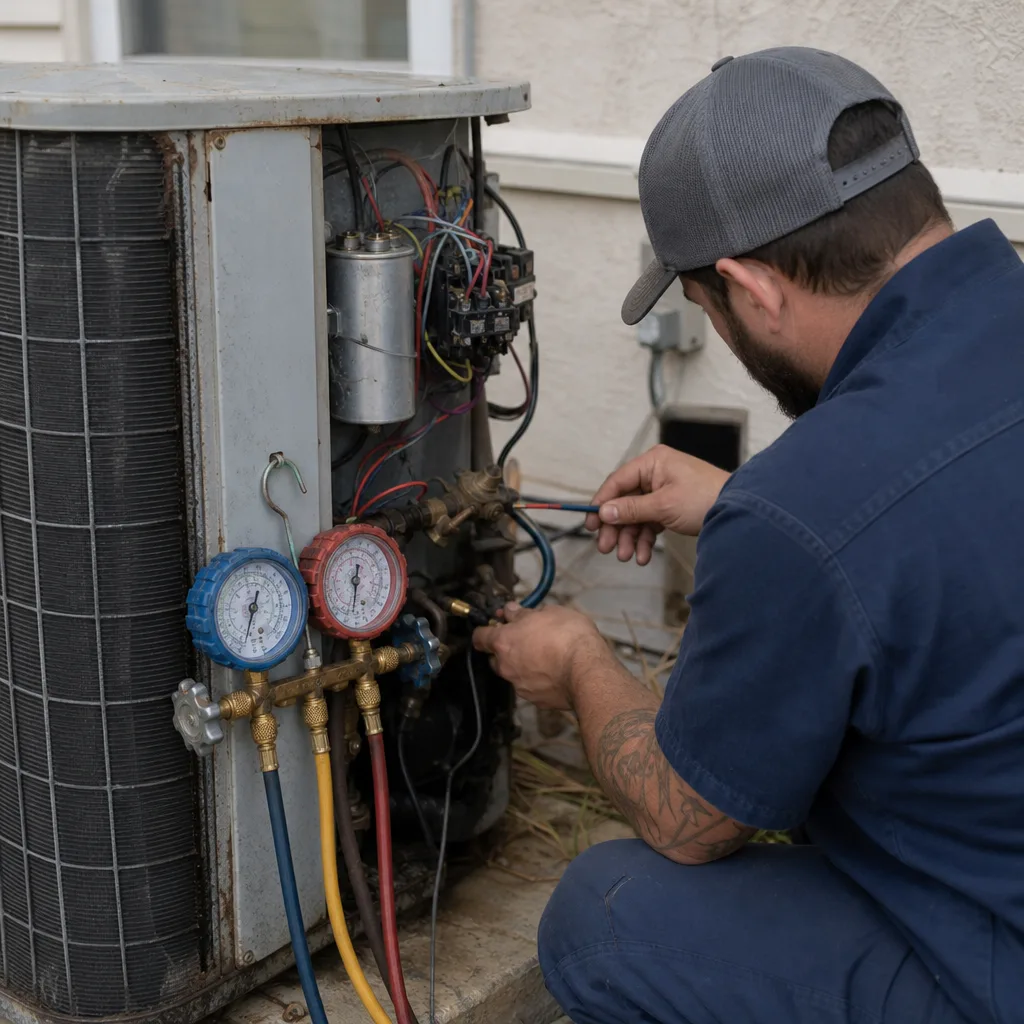
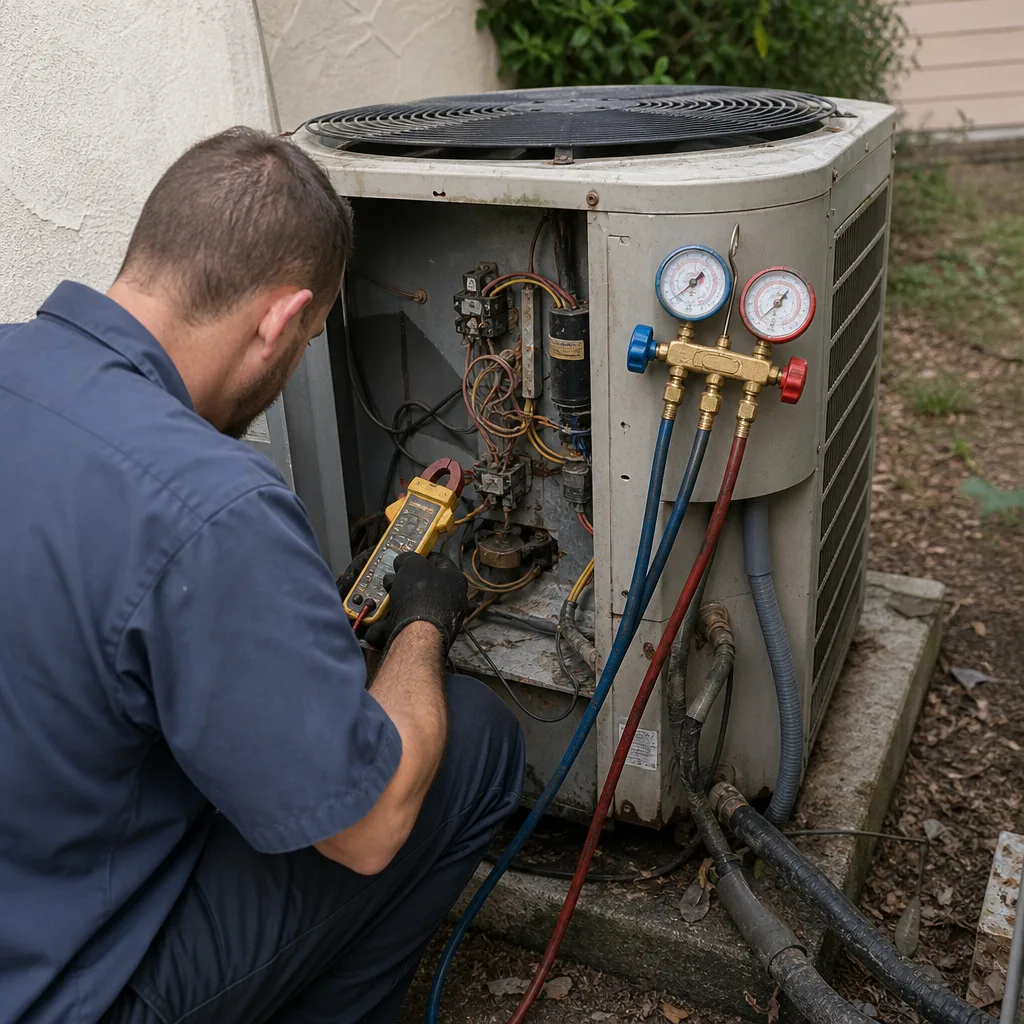
See the difference
 Before
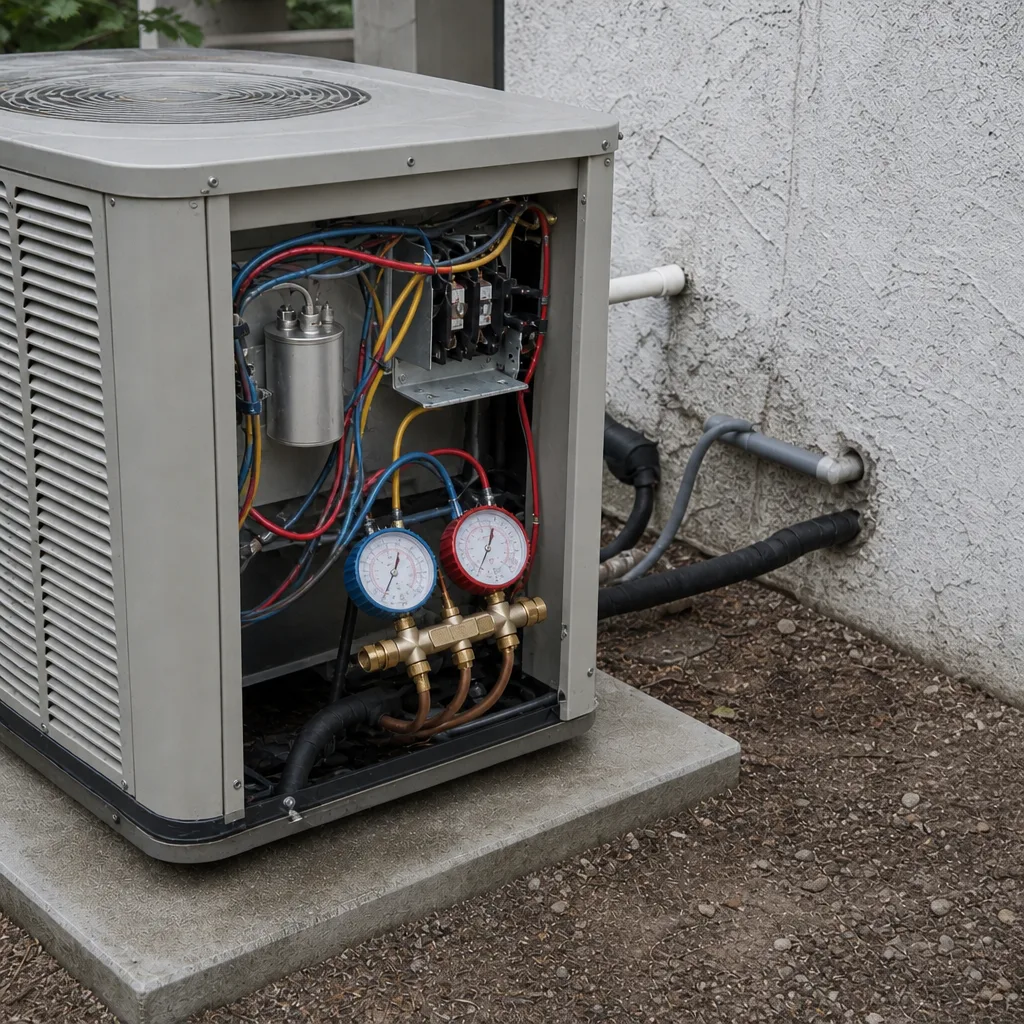 After
 Before
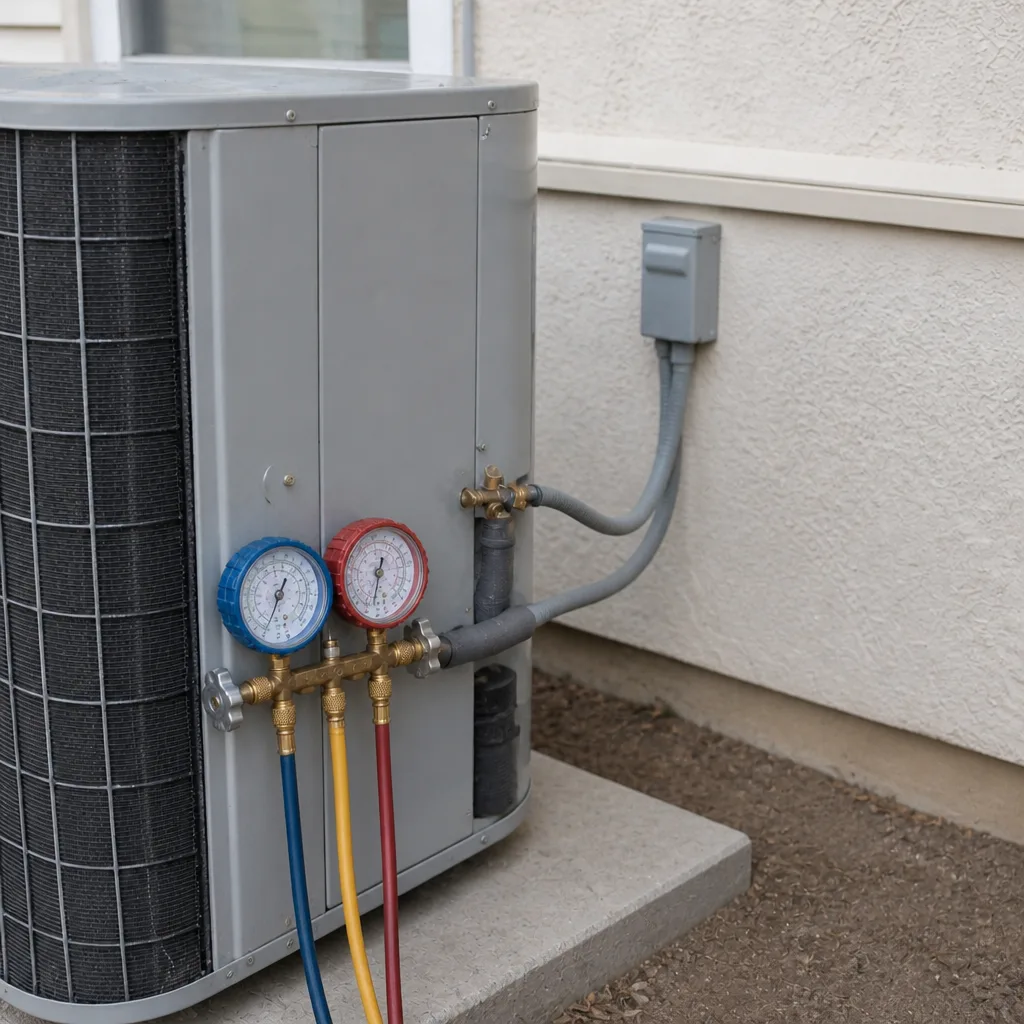 After
 Before
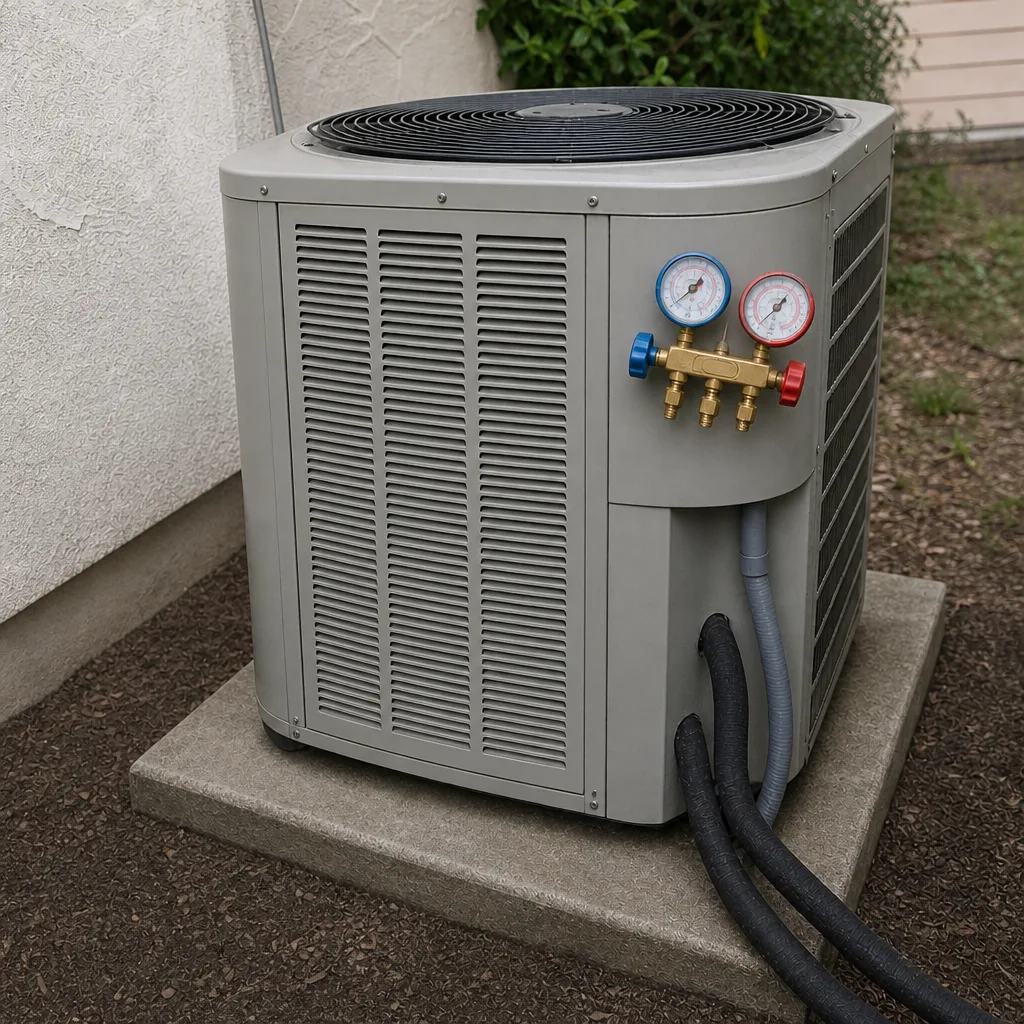 After
When to Call a Professional
Some problems announce themselves clearly. Others sit quietly until the equipment fails at the worst possible time. Call a professional when you notice water in the drain pan that doesn’t clear after a flush, refrigerant that has been added more than once, or a capacitor that has failed or drifted out of spec. Call if you see growth on the coil or smell mustiness coming from vents. And call if the system is cooling unevenly room to room or running longer than it used to. This is where tracking your own readings pays off, because a technician can compare today’s numbers to yesterday’s and give you a straight answer on whether this is a repair or the point where replacement makes more sense. Thrive AC Repair offers free estimates in St. Petersburg – call (855) 490-0819. We answer 24/7, with fast dispatch from 7am to 7pm, Sunday through Friday.
Frequently Asked Questions
Check it every month during heavy cooling and replace it when you can’t see light through it, which may be every 3 to 4 weeks in the humid season. The “every 90 days” advice assumes a dry climate. In St. Petersburg, a filter that runs three months becomes a growth surface that feeds mustiness into your air.
Yes, we consider one close to essential in a high-humidity climate. A wet switch shuts the system off if water collects in the drain pan, preventing it from overflowing into your ceiling or walls when a drain clogs. It’s a small, inexpensive safeguard against a large repair.
Most St. Petersburg homes do run cooling in some form through most of the year, so plan maintenance around use rather than seasons. Expect a filter check and drain flush on a tighter schedule than a four-season climate would suggest.
Check cooling performance, filter condition, drain flow, and unusual noises at 30 days, verify airflow and thermostat performance at 60, and lock in your baseline readings at 90. The 90-day report is the paperwork that makes future diagnostics much faster and easier.
No, cleaning the evaporator coil requires opening the air handler and working around electrical components. It’s a technician task. You can safely wipe down reachable surfaces and watch for visible buildup, then call a professional if you see growth.
Ask for refrigerant charge, airflow/static pressure, capacitor capacitance and condition, electrical amperage draw, and coil condition in writing. Keeping a record lets you spot changes early, which is what makes repair-versus-replace advice trustworthy. Call (855) 490-0819 for a free estimate.
The Bottom Line
St. Petersburg homeowners benefit most from a checklist built around humidity, not seasons. That means monthly filter checks, 30-to-60 day drain flushes, a wet switch on the drain pan, and a 30-60-90 day post-installation sequence that locks in a baseline while the warranty is fresh. Document your refrigerant, airflow, and capacitor readings so a future problem is a comparison instead of a mystery. Know the line between flashlight-only tasks and licensed work, and cross it only when you’re sure. A year-round maintenance rhythm is what keeps a home comfortable season after season, and one company that services the major brands can help you stay on it.
Ready to build your maintenance plan? Call (855) 490-0819 for a free estimate. We answer 24/7. Fast dispatch from 7am to 7pm, Sunday through Friday, and we work on your system no matter the brand. Thrive AC Repair covers St. Petersburg and the surrounding communities with year-round heating and cooling care. Visit Thrive AC Repair to learn how we approach repairs and installations.
Written by the team at Thrive AC Repair.